Technology
The Pyrox Process
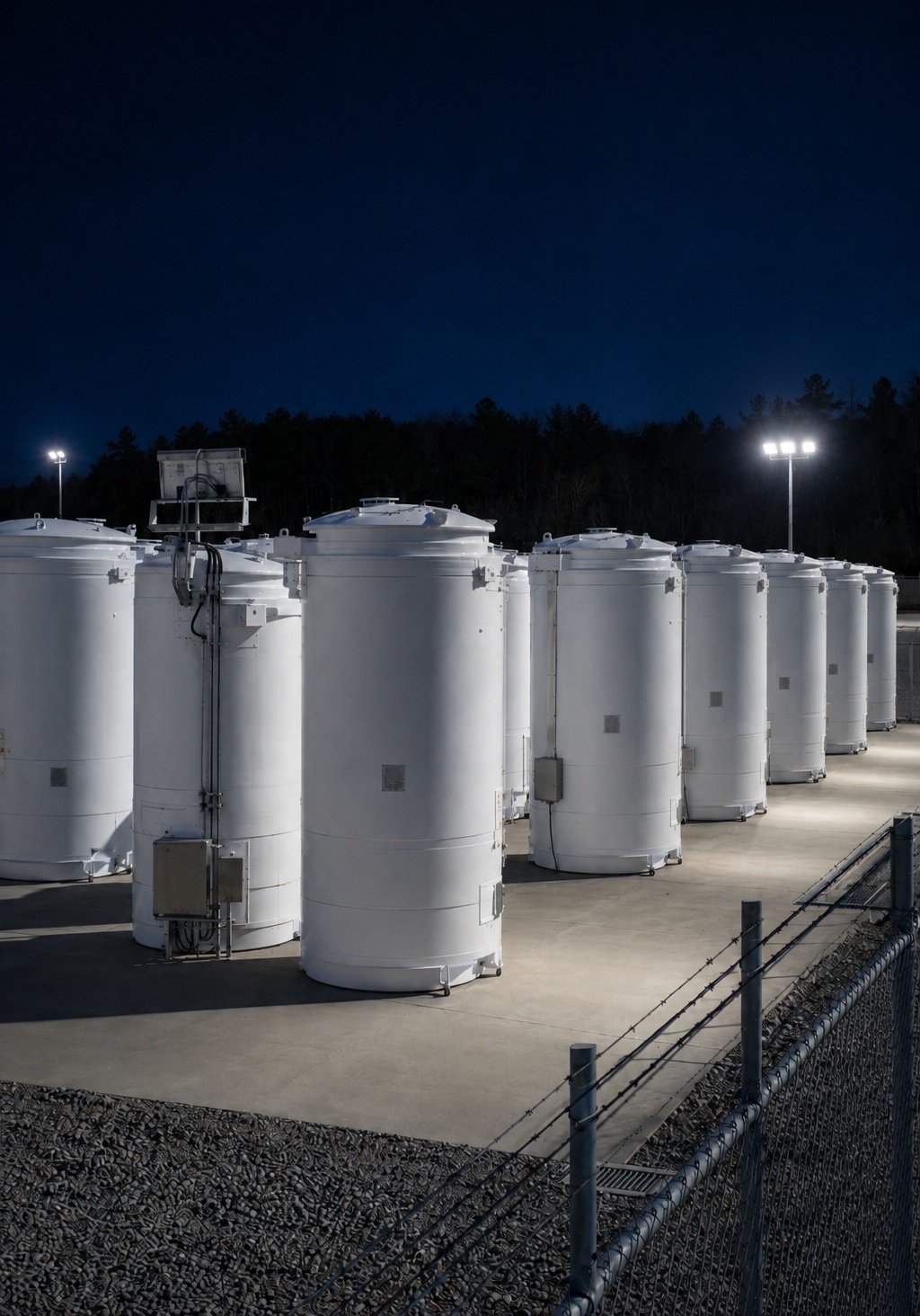
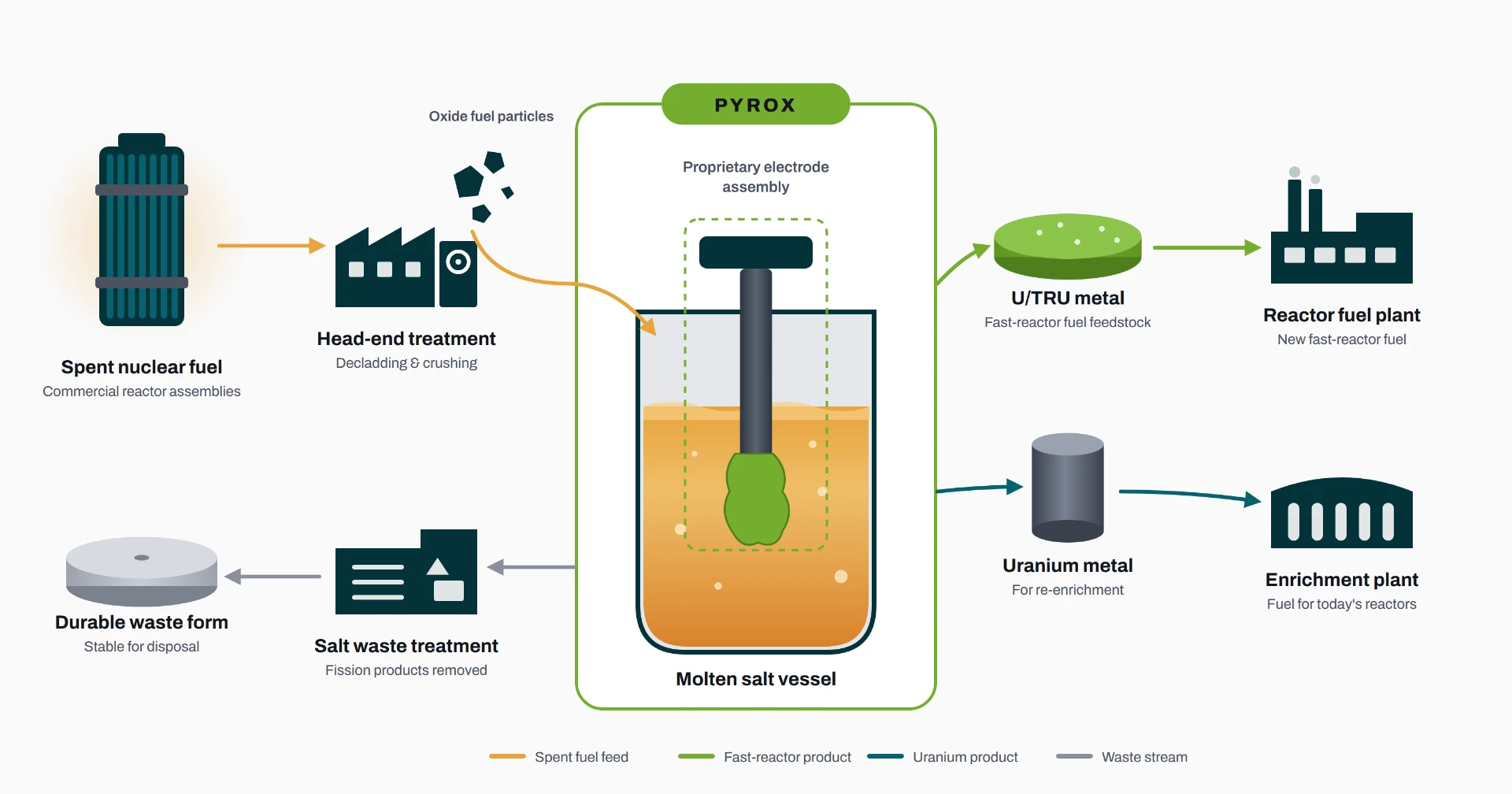
The patent-pending Pyrox process recovers uranium and transuranic (TRU) actinides from commercial spent nuclear fuel as purified metal for emerging fast reactors. The U.S. holds more than 95,000 tons of this fuel, growing by about 2,000 tons per year, with no permanent disposal site. The transuranics in today's inventory alone could fuel the U.S. nuclear fleet for 10 years. We believe opening the fuel cycle to oxide spent fuel is a world-changing development — and that's what Pyrox has the promise to achieve.
Four steps — all inside one molten salt process
- 01
Dissolution
Spent oxide fuel dissolved in LiCl-KCl molten salt.
- 02
Chlorination
In-situ chlorination of the oxides within the salt.
- 03
Drawdown
Galvanic electrochemical drawdown recovers U and U/TRU.
- 04
Metallic fuel
U/TRU metal ready for fast-reactor fuel; salt regenerated.
What makes Pyrox different
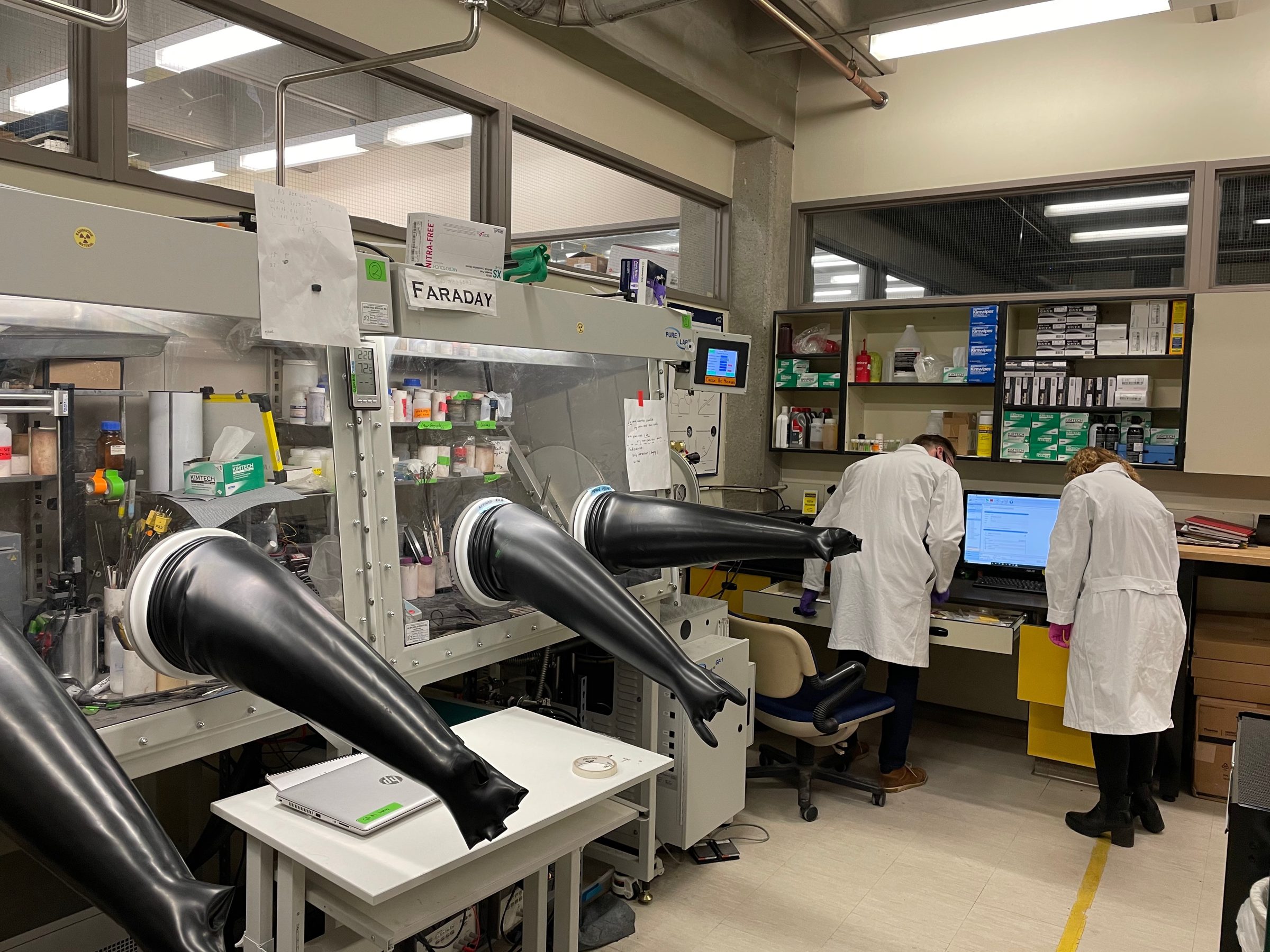
What differentiates Pyrox from the previous state of the art for pyroprocessing is that it achieves complete dissolution of the spent fuel into a molten salt. This circumvents the need to perform electrolytic reduction of oxide to metal followed by electrorefining impure metal to pure metal.
Conventional pyroprocessing
4 major process steps, 3 waste streams
Pyrox
2 major process steps, 1 waste stream
Real-time accountability of fissile material
Because Pyrox fully dissolves spent fuel, fissile actinides stay in a single homogeneous liquid rather than spread across multiple solid and liquid phases. That enables accurate, real-time monitoring of fissile inventory — dramatically reducing proliferation risk.
One vessel: dissolution and recovery
It is the transuranic actinides (TRU) in spent light water reactor fuel that are valuable feedstock for making new fuel. In the Pyrox process, the same vessel that dissolves the spent fuel is used to electrochemically recover purified actinides with significantly concentrated TRU.